Last updated: April 2026
Quick Answer: What Is the Best Heat Reduction Window Film for a Home?
The best heat reduction window film for home use is a dual-reflective ceramic window film with a high Total Solar Energy Rejected (TSER) rating. Ceramic films use nano-ceramic particles to block solar heat with a neutral charcoal look making them the preferred choice for living spaces.
At Concord Window Film, the ComforTech™ Ceramic Series is our top-rated heat reduction film. Available in five shades — ComforTech 45, 35, 25, 15, and 05 — it rejects between 51% and 82% of total solar energy, compared to just 14% rejected by untreated clear glass.
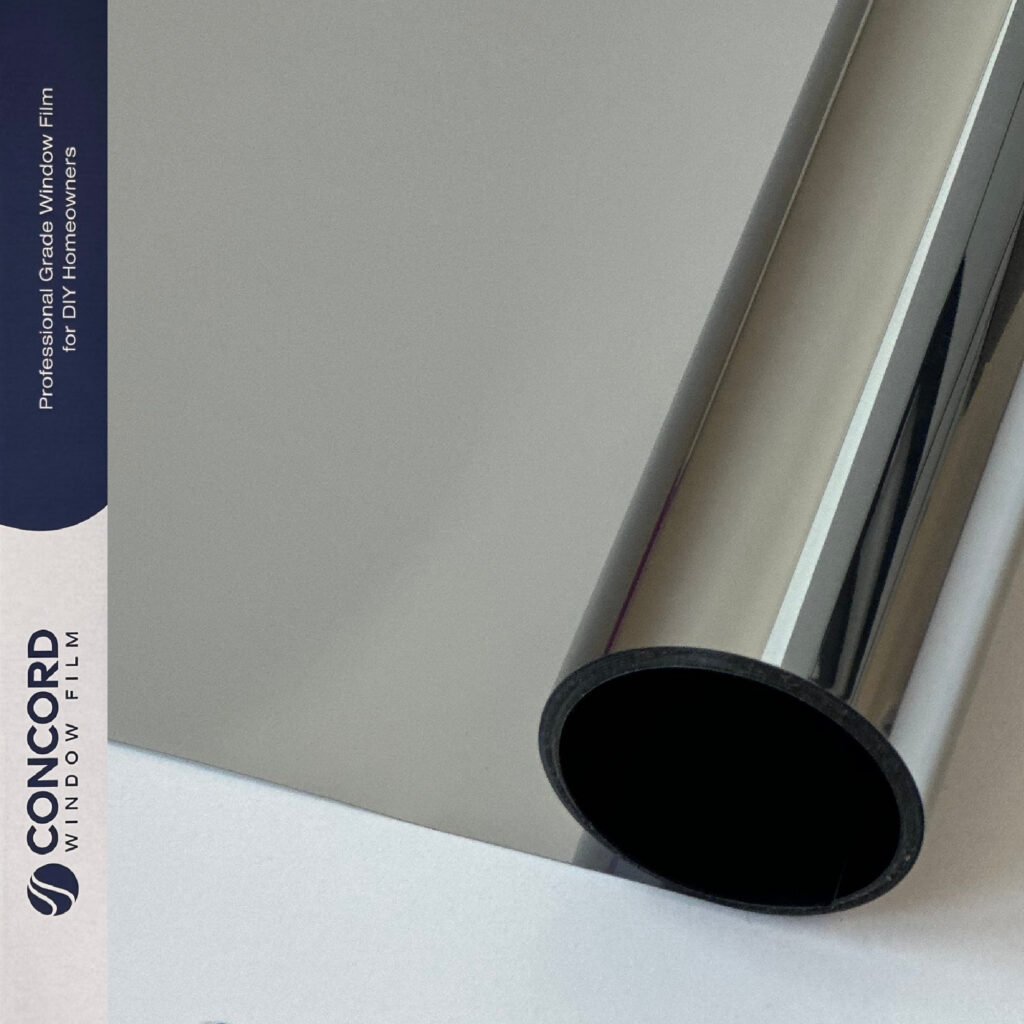
If maximum heat blocking is the priority and appearance is secondary, the Silver 15 Reflective Film is also available.
What Is Heat Reduction Window Film?
Heat reduction window film is a thin, adhesive-backed film applied directly to the interior surface of window glass. It works by reflecting and absorbing incoming solar energy before it can enter the room as heat.
Standard single pane clear glass has a Solar Heat Gain Coefficient (SHGC) of 0.84 and rejects only 14% of total solar energy. A quality heat reduction film dramatically improves that — reducing the solar energy entering the room by as much as 50–68 percentage points compared to bare glass.
Unlike window replacement, which costs thousands of dollars per window, heat reduction film installs directly onto your existing glass — making it one of the most cost-effective ways to address solar heat gain in a home.
How Heat Reduction Window Film Works
Window film reduces heat through two mechanisms working together:
Solar reflection — The film’s exterior-facing surface reflects a portion of incoming sunlight back outward before it ever reaches the glass.
Solar absorption — The film absorbs a portion of the solar energy that isn’t reflected, then re-radiates the majority of that absorbed energy back outward rather than inward.
The combination of these two effects is what the industry measures as Total Solar Energy Rejected (TSER) — the single most important number for comparing heat reduction performance across films.
The Most Important Performance Metric: TSER vs. SHGC
When comparing heat reduction window films, two measurements from the National Fenestration Rating Council (NFRC) matter most:
Total Solar Energy Rejected (TSER) measures the percentage of total solar energy that a filmed window blocks — through both reflection and absorption. Higher is better. Clear glass: 14%.
Solar Heat Gain Coefficient (SHGC) measures the fraction of solar energy that passes through a filmed window. Lower is better. Clear glass: 0.84.
These two numbers are the most reliable way to compare films across brands. A film’s tint level or darkness is not a reliable proxy for heat rejection performance — ceramic films can deliver strong heat control at relatively light tint levels because of how the technology works.
Best Heat Reduction Window Films: ComforTech™ Ceramic Series
The ComforTech Ceramic Series is a professional-grade, dual-reflective nano-ceramic film — the same technology used in commercial installations — available for homeowner DIY installation.
What Makes It the Best Choice for Heat Reduction
- Nano-ceramic construction: Titanium nitride particles deposited at nanometer scale provide excellent infrared heat blocking without relying on heavy dyes or metals that fade over time
- Dual-reflective design: Higher exterior reflectivity blocks solar heat effectively; lower interior reflectivity means less of a mirror effect from inside — especially important at night
- 2-ply construction: More durable and easier to handle during DIY installation than single-ply consumer films
- Dry adhesive: our dry adhesive
- 99%+ UV rejection: Blocks virtually all UV regardless of shade selected
ComforTech™ Heat Reduction Performance by Shade
| Film | VLT | TSER | SHGC | UV Rejected | Glare Reduction |
|---|---|---|---|---|---|
| Clear Glass (baseline) | 90% | 14% | 0.84 | 29% | — |
| ComforTech 45 | 45% | 51% | 0.48 | >99% | 51% |
| ComforTech 35 | 35% | 58% | 0.41 | >99% | 61% |
| ComforTech 25 | 23% | 69% | 0.31 | >99% | 74% |
| ComforTech 15 | 15% | 75% | 0.25 | >99% | 84% |
| ComforTech 05 | 7% | 82% | 0.18 | >99% | 92% |
Specifications measured on 1/8″ (3mm) clear glass per NFRC standards. View full spec chart →
Which ComforTech Shade Is Right for Your Heat Problem?
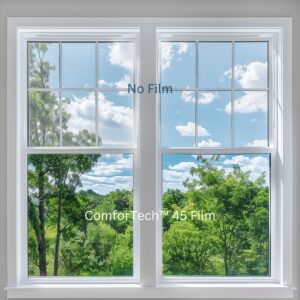
ComforTech 45 — The lightest shade. Still rejects 51% of solar energy — more than 3× the performance of bare glass — while allowing 45% of visible light through. Best for rooms where preserving natural brightness is the top priority alongside moderate heat control.
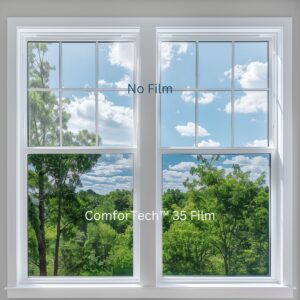
ComforTech 35 — A popular middle-ground choice. Rejects 58% of solar energy with 35% visible light transmission. Good for living areas where you want meaningful heat reduction without a noticeably dark appearance.
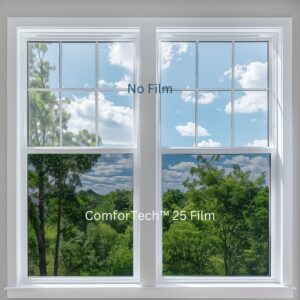
ComforTech 25 — A step up in heat performance at 69% TSER. Noticeably reduces afternoon heat gain while still allowing a comfortable level of natural light. A strong choice for most residential applications.
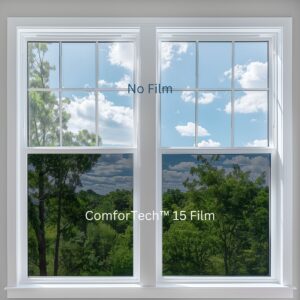
ComforTech 15 — The most popular choice for serious heat problems. Rejects 75% of total solar energy — meaning only 25% of solar energy passes through compared to 86% through bare glass. Ideal for south- and west-facing windows that receive direct afternoon sun.
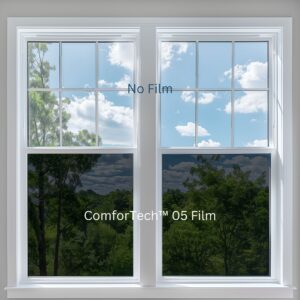
ComforTech 05 — Maximum heat reduction at 82% TSER. Best for sun rooms, large west-facing picture windows, or spaces that are genuinely uncomfortable in summer even with the air conditioning running. Also provides the strongest daytime privacy of any shade in the line.
All five shades block more than 99% of UV radiation, protecting furniture, flooring, and artwork from fading — a benefit that works every day of the year, not just in summer.
Shop ComforTech Ceramic Series Heat Reduction Film
-

ComforTech 45 Ceramic Window Film for Home | UV Protection | Glare Reduction | Solar Control
Rated 4.83 out of 5$54.00 – $1,540.00Price range: $54.00 through $1,540.00 Select options This product has multiple variants. The options may be chosen on the product page -

ComforTech 35 Ceramic Window Film for Home | UV Protection | Glare Reduction | Solar Control
Rated 4.73 out of 5$54.00 – $1,540.00Price range: $54.00 through $1,540.00 Select options This product has multiple variants. The options may be chosen on the product page -

ComforTech 25 Ceramic Window Film for Home | Solar | Privacy | UV Protection
Rated 5.00 out of 5$54.00 – $1,540.00Price range: $54.00 through $1,540.00 Select options This product has multiple variants. The options may be chosen on the product page -

ComforTech 15 Ceramic Window Film for Home | Solar Control | Privacy | UV Protection
Rated 4.83 out of 5$54.00 – $1,540.00Price range: $54.00 through $1,540.00 Select options This product has multiple variants. The options may be chosen on the product page -

ComforTech 05 Ceramic Window Film for Home | Solar Control | Privacy | UV Protection
Rated 5.00 out of 5$54.00 – $1,540.00Price range: $54.00 through $1,540.00 Select options This product has multiple variants. The options may be chosen on the product page
Silver 15 Reflective: An Alternative for Maximum Heat Blocking
For homeowners where heat rejection performance is the top priority and appearance is less of a concern, the Silver 15 Reflective Film is also available.
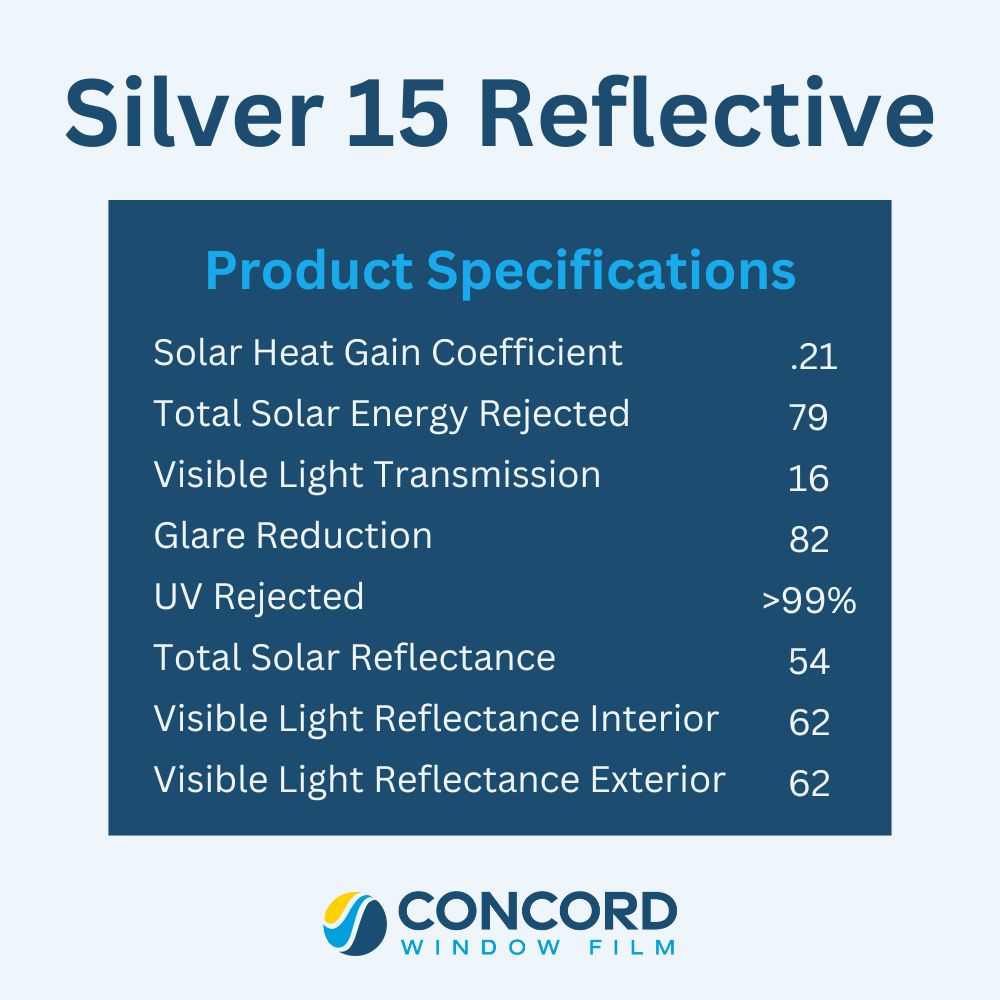
Important distinction: Silver 15 uses metal-based technology and is not dual-reflective. It has uniformly high reflectivity on both the exterior and interior surfaces — creating a pronounced mirror appearance from inside the home as well as outside, particularly as lighting conditions change. This is the key difference from ComforTech, which has lower interior reflectivity for a more natural look from inside.
Silver 15 is a good fit for utility spaces, garage windows, rental properties, or any window where maximum performance matters more than interior aesthetics and budget is a concern.
What's the Difference Between ComforTech 15 and Silver 15?
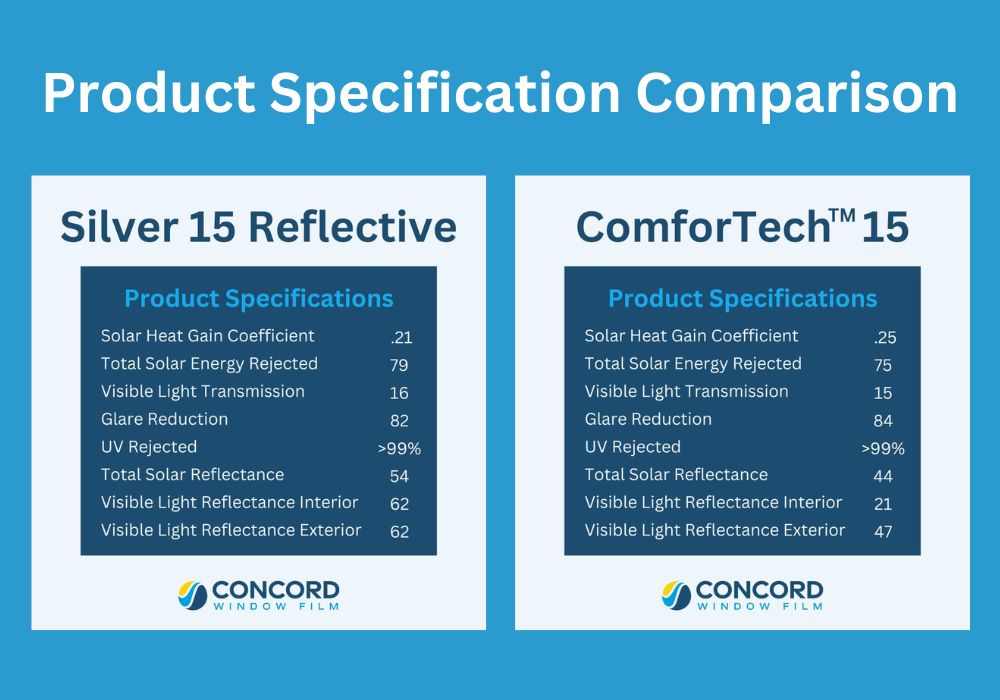
While both ComforTech 15 and Silver 15 have the same shade or VLT (visible light transmission) the differences are many:
- ComforTech 15 is a ceramic film and Silver 15 is a metal film
- ComforTech 15 uses a dry adhesive while Silver 15 uses a pressure sensitive adhesive
- ComforTech 15 is dual reflective with a lower interior reflectivity than exterior; Silver 15 has the same reflectivity inside and out
- ComforTech 15 is 2MIL thick, while Silver 15 is 1.5MIL thick
- Silver 15 is less expensive than ComforTech 15
- Silver 15 has a TSER of 79% while ComforTech 15 has a TSER of 75%
Heat Reduction Window Film Comparison: Ceramic vs. Reflective
| Factor | ComforTech Ceramic | Silver 15 Reflective |
|---|---|---|
| Best TSER Available | 82% (ComforTech 05) | 79% |
| Interior Appearance | Low reflectivity — clear, natural view | High reflectivity — mirror effect |
| Exterior Appearance | Subtle reflective tint | Pronounced silver mirror |
| Dual-Reflective | ✓ Yes | ✗ No |
| UV Protection | >99% | >99% |
| Film Technology | Nano-ceramic | Metal-based |
| Color Stability Over Time | Excellent (ceramic doesn't fade) | Excellent - does not fade |
| DIY Adhesive Type | Dry adhesive (easier to apply) | Pressure-sensitive adhesive |
| Best For | Living spaces, bedrooms, main rooms | Utility areas, maximum heat priority |
Bottom line: For most home living spaces, ceramic film is the better overall choice because it balances heat reduction performance with a comfortable interior appearance. Reflective film is the right call when you need the highest possible TSER and don't mind the mirror look.
How Much Heat Will Window Film Actually Reduce?
This is the most common question homeowners ask. Here’s a practical way to understand the real-world impact:
Standard single pane clear glass admits about 86% of the sun’s solar energy (TSER: 14%). With ComforTech 15 (TSER: 75%) installed, only 25% of solar energy passes through — a reduction of nearly two-thirds compared to your current bare glass.
In practical terms, most homeowners notice:
- Rooms that previously overheated in the afternoon staying noticeably cooler
- Reduced air conditioning run time and lower summer energy bills
- Elimination of hot spots near windows and sliding glass doors
- More even temperatures throughout the room
The degree of improvement depends on window orientation (south- and west-facing windows receive the most direct sun), glass type, and room size.
Source: Concord Window Film. Review photo of ComforTech 45 installed on customer’s window.
How to Choose the Right Heat Reduction Window Film
Step 1: Identify your priority windows. South- and west-facing windows drive the most solar heat gain. Start there.
Step 2: Choose your film type. If you want clear views and a natural interior look → ComforTech Ceramic. If maximum heat rejection matters and you are on a budget → Silver 15 Reflective.
Step 3: Choose your shade. Within the ComforTech line, go as dark as you’re comfortable with — darker = more heat rejection. ComforTech 15 is a popular choice for rooms with significant heat problems.
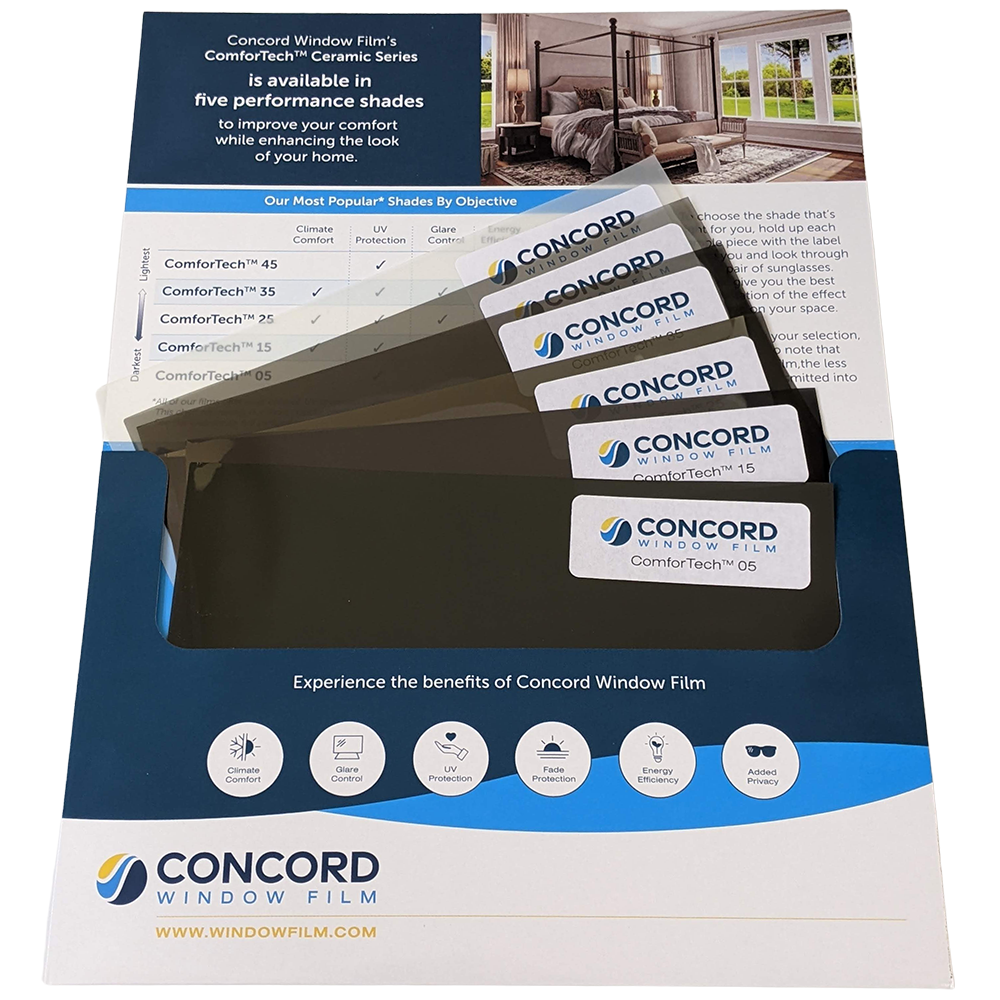
Step 4: Try a sample first. Before committing, order a window film sample kit and tape samples to your windows. View them from inside and outside at different times of day — morning, afternoon, and evening — to see exactly how each shade will look in your space.
Not sure which film is right for you? Take the product recommendation quiz to narrow down your options based on your specific situation.
Concord Window Film Sample Kit
Order a window film sample kit and see the film in your own space before you buy. This is the best way to determine which film and shade is right for you!
Our sample kit comes with 5″ x 7″ pieces of all five shades of our ComforTech Ceramic Series window film along with our Matte White Privacy and Silver 15 Reflective films. The kit costs $5 but comes with a coupon code for $5 off your first film purchase.
Benefits of Heat Reduction Window Film Beyond Comfort
Lower Energy Bills
By reducing solar heat gain, heat reduction film decreases the workload on your air conditioning system. Less AC run time translates directly to lower electricity costs during peak summer months.
Read more about the energy efficiency of window film.
UV Protection and Fade Prevention
All ComforTech and Silver 15 films block more than 99% of UV radiation — the primary driver of fading in furniture, hardwood floors, rugs, and artwork. This benefit works every day of the year, not just in summer.
Read more about UV blocking window film.
Glare Reduction
Heat reduction films reduce the amount of visible light entering through windows, which cuts screen glare on TVs and monitors and reduces eye strain in bright rooms. ComforTech 15 reduces glare by 84%; ComforTech 05 by 92%.
Read more about glare reduction here.
Privacy
The exterior-facing reflectivity of our heat reduction films ComforTech 25, 15 and 05 and Silver 15 provide daytime privacy — people outside cannot see in clearly when sunlight is hitting the glass. This is a natural side benefit of the solar control technology.
Frequently Asked Questions About Heat Reduction Window Film
The best heat reduction window film for most homes is a ceramic film with a high TSER rating. The ComforTech Ceramic Series rejects 51–82% of total solar energy depending on shade, compared to just 14% for untreated glass. For an alternative with high heat rejection, the Silver 15 Reflective Film is also available.
Yes. Quality heat reduction window film significantly reduces solar heat gain by reflecting and absorbing solar energy before it enters the room. ComforTech 15, for example, has a TSER of 75% — meaning only 25% of solar energy passes through compared to 86% through bare glass.
TSER (Total Solar Energy Rejected) measures the percentage of solar energy a filmed window blocks — higher is better. SHGC (Solar Heat Gain Coefficient) measures the fraction of solar energy that passes through — lower is better. Both are measured per NFRC standards and are the most reliable metrics for comparing heat reduction performance across brands.
The ComforTech 05 ceramic film achieves 82% TSER, which is very high performance. Ceramic film is typically the better choice for home living spaces because it delivers strong heat reduction with a more natural interior appearance. The ComforTech Ceramic Series is dual-reflective — higher exterior reflectivity for solar control, but lower interior reflectivity so there’s less mirror effect from inside.
Darker film generally means more heat rejection, but even lighter ceramic shades deliver meaningful performance. ComforTech 45 (VLT: 45%) still rejects 51% of solar energy — more than 3× bare glass — while remaining the lightest option. Homeowners with more serious heat problems typically choose ComforTech 15 (VLT: 15%, TSER: 75%) or ComforTech 25 (VLT: 23%, TSER: 69%) as the best balance of performance and appearance.

Yes. The ComforTech Ceramic Series uses a dry adhesive activated with water, which is significantly easier to work with during DIY installation than pressure-sensitive adhesives. The 2-ply construction also makes the film more durable and easier to handle on large windows. Full installation instructions are available at windowfilm.com/how-to/install.
Yes, with an important note: you should verify with the glass manufacturer before applying film to double-pane windows, particularly those with low-e coatings. Most standard double-pane windows are fully compatible with window film. Check our FAQ page for more detail.
ComforTech Ceramic Series film is backed by a manufacturer warranty and, with proper installation, is designed to last many years. Ceramic films are particularly durable because the color component — titanium nitride particles — does not fade or discolor the way dye-based films can over time.
Ready to Reduce Heat in Your Home?
Start with a sample kit to see exactly how the film will look on your windows before you buy. Or shop the ComforTech Ceramic Series now to find the right shade for your heat problem.